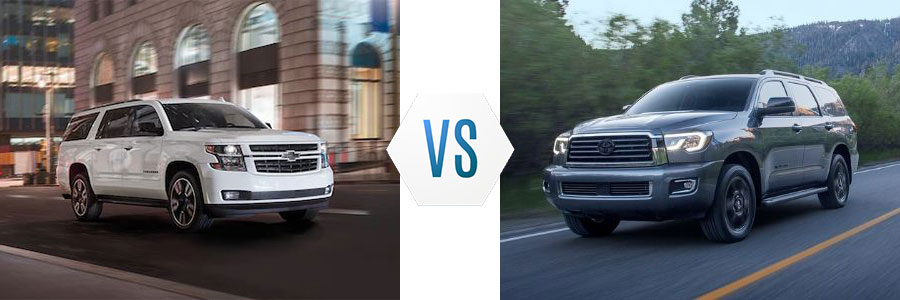
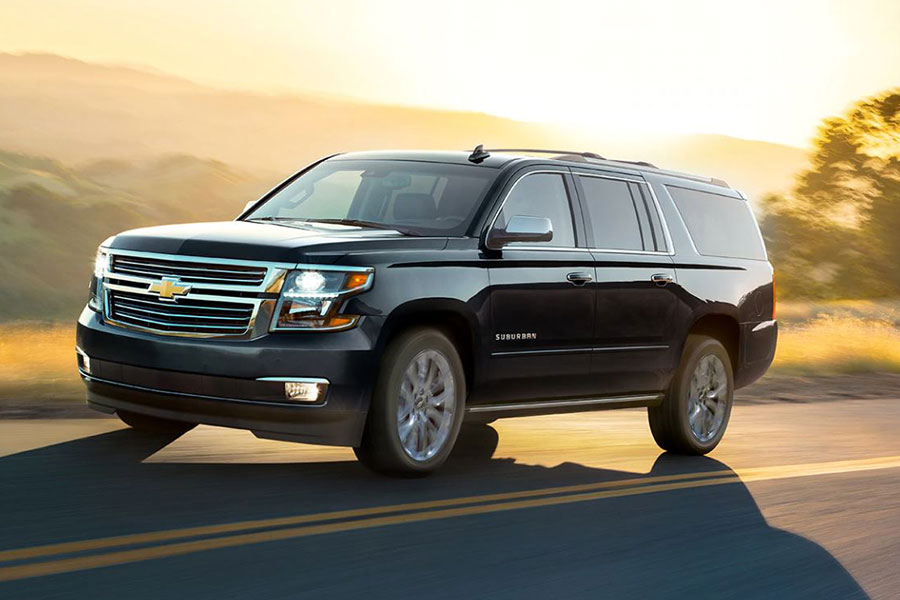
The 2020 Chevrolet Suburban is one of the most versatile and advanced full-size SUVs. From its comfortable ride to its power and towing capacity, there is one tailored to meet your needs. The 2020 Toyota Sequoia is a full-size SUV to compare, but Sequoia’s dated style makes the Suburban a better contender in this SUV class. You can see for yourself at Burlington Chevrolet.
Style/Passenger/Cargo and Towing Specs
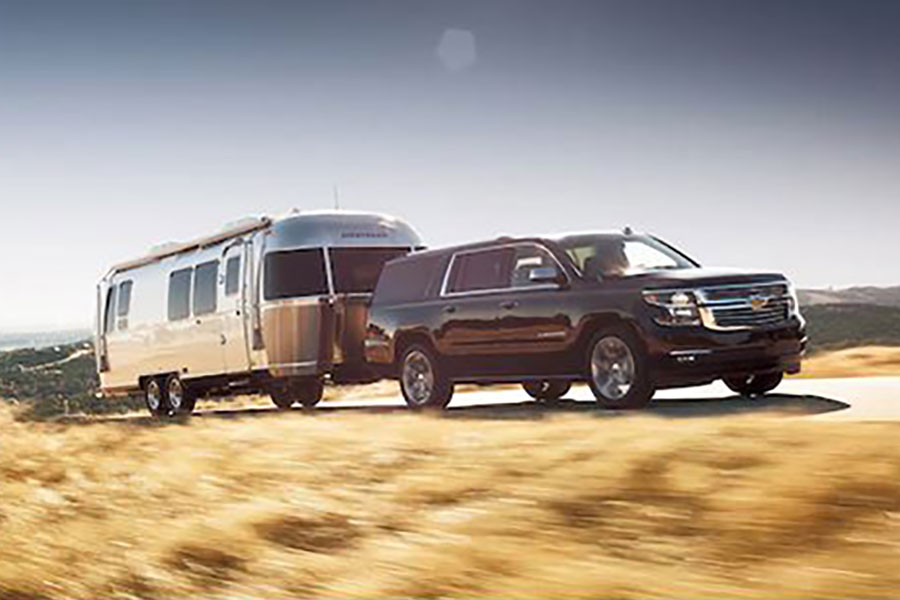
The Chevrolet Suburban offers comfortable seating for seven to nine people, with a choice of an optional front-row bench seat and second-row captain’s chairs. A 10-way power-adjustable driver’s seat, a six-way power-adjustable passenger seat, and a leather-wrapped steering wheel is standard, with optional leather upholstery and heated and ventilated front seats. You don’t have to look too far for expansive cargo space. The Suburban has 39.3 feet of cargo space behind its third row, 76.7 cubic feet with the third-row seats folded down, and a class-leading 121.7 cubic feet when the second-and third-row seats are folded down. It has a towing capacity of 8,300 pounds when properly equipped.
The Sequoia also seats eight comfortably with plenty of head and legroom; but it’s been more than a decade since the Sequoia’s last redesign which is noticeable in its cabin. From its outdated styling to the large amount of hard plastics, it has one of the least impressive interiors in its class. The exterior look has also stayed the same, with the Tundra-based body-on-frame design. This big body frame provides just 18.9 cubic feet of cargo space behind the last row of seating, but with the second and third rows folded down, it provides 120.1 cubic feet of cargo space. Even with its build, it doesn’t measure up to the Suburban’s towing capacity. When fully equipped, the Sequoia can tow up to 7,400 pounds. This is lower than most large SUV tow ratings.
Safety and Tech Features
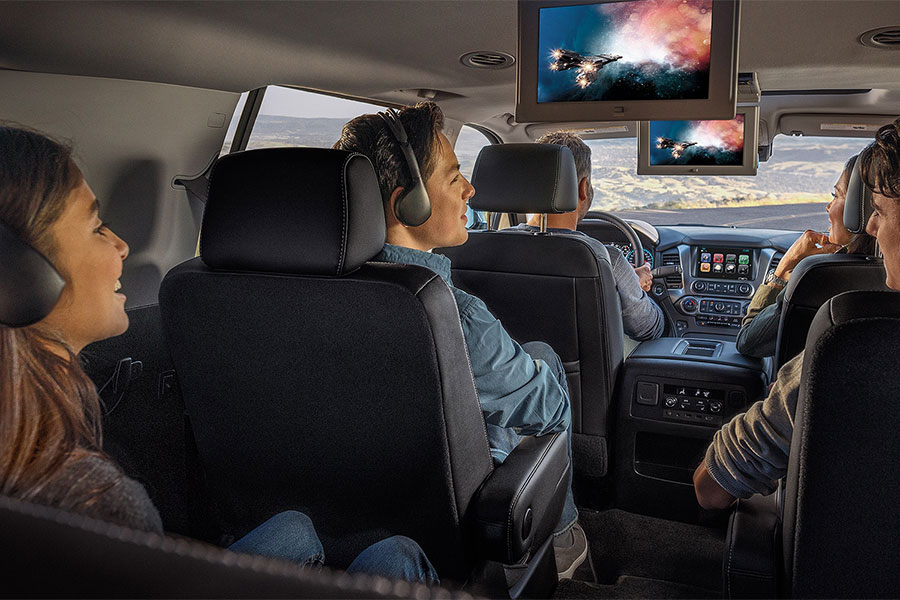
The Suburban comes standard with the easy to use Chevrolet Infotainment system that has large virtual buttons on an 8-inch touch screen, with Android Auto and Apple CarPlay. Also standard is voice recognition, USB ports, a six-speaker stereo, Bluetooth, satellite radio, HD Radio, and a Wi-Fi hot spot. The Suburban comes standard with a rearview mirror, rear parking sensors, rain-sensing wipers, and the Teen Driver System. There are plenty of available features that include forward collision warning, forward automatic emergency braking, lane departure warning, lane keep assist, blind spot monitoring, and rear cross traffic alert.
The Entune infotainment system with a new 7-inch touchscreen providing Apple CarPlay and Android Auto was added this year to the Sequoia; and the Safety Sense-P system is now standard on all models. This provides adaptive cruise control, forward collision mitigation and lane departure warning. Blind-spot monitoring and rear cross-traffic alert are also standard.
Fuel and Pricing and Power
The 2020 Chevrolet Suburban pricing starts at $50,800 for the LS and ranges to $65,500 for the Premier model. The Suburban moves with ease with its standard 5.3-liter V-8 engine that makes 355 hp and 383 pound-feet of torque, paired with a six-speed automatic transmission. Buyers can opt for a 6.2-liter V-8 engine that produces 420 hp and 460 pound-feet of torque with a 10-speed automatic transmission, making its powertrain have a quicker acceleration. Its base engine model gets an estimated 15/22 mpg in the city and on the highway.
The 2020 Toyota Sequoia base price starts at $49,905, with the top-of-the line Sequoia Platinum starting at $65,945. The Sequoia gets poor ratings on its gas mileage, averaging just 13/17 mpg on the city and highway. All trims of the Sequoia come with a 381 hp 5.7-liter V8 engine and a six-speed automatic transmission.
Overview
The 2020 Chevrolet Suburban ranks high in its class and delivers nearly all of what you’d want from a full-size SUV. It not only looks good, but it drives well too. Come take a ride and your choice will be clear.